From State Scholarships to University-Led Recruitment
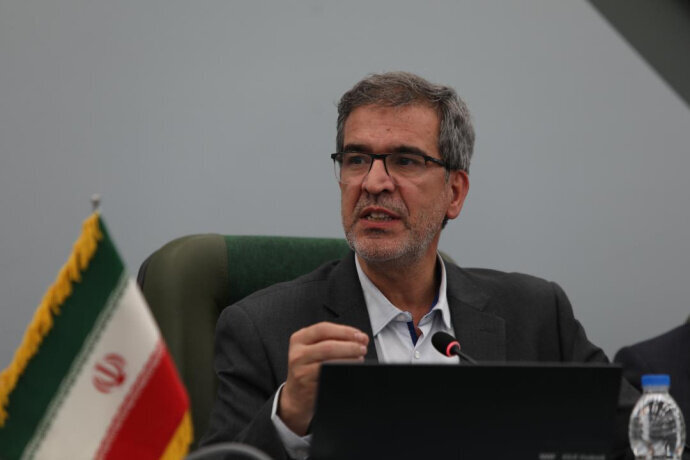
According to a report by Mehr News Agency citing the Organization of Student Affairs, Abolhassan Vahidi, Deputy Minister of Science for Educational Affairs, addressed the 70th session of the National Working Group for Attracting International Students. He highlighted a fundamental transformation since the 1990s: prior to that decade, foreign enrollment relied heavily on government-funded scholarships. Since then, universities have assumed a central role in recruiting tuition-paying students, with academic evaluation and admission processes now managed directly by the institutions themselves.
Quantitative Growth Under Qualitative Scrutiny
Vahidi acknowledged a significant rise in international admissions in recent years but cautioned that Iran’s higher education capacity far exceeds current numbers. The shared concern, he emphasized, is that pursuit of numerical targets must not compromise quality. Universities should not view international recruitment merely as a revenue stream; sacrificing standards would damaging Iran’s standing in regional and global academic markets over the medium and long term.
Warning Against Unscrupulous Educational Intermediaries
The deputy minister criticized incoming reports regarding the weak academic proficiency of some entrants. Specifically, he cited cases where students lack command of both Persian and English, a situation he deemed unjustifiable. He urged universities to exercise strict oversight over admission procedures to prevent agents, middlemen, or unscrupulous brokers from undermining the credibility of Iranian institutions. Quality, he asserted, remains the non-negotiable red line of higher education.
Empowerment Over Exclusion: A Remedial Approach
Vahidi argued against using student deficiencies as a pretext to halt recruitment altogether. Instead, he stressed that a university’s responsibility toward an international student begins at admission. He called for the design of supplementary educational programs, specialized courses, and roles such as “academic assistants” and “research assistants” to guide average or underperforming students toward required scholarly standards.
Zero Tolerance for Procedural Violations
Addressing potential misconduct, he insisted on decisive action against any corruption or irregularities in the attraction and education pipeline. Without firm consequences, such practices will persist. The system must signal that involvement in this sector carries heavy costs for violators.
Accreditation as a Catalyst for Systemic Improvement
Referring to upcoming accreditation initiatives for universities in the international student domain, Vahidi noted that a robust accreditation framework will help identify and strengthen institutions operating with coherent programs and full legal compliance.
Conditional Support Anchored in Quality Principles
In closing remarks to the working group members, he reaffirmed that the Ministry of Science’s support for universities pursuing internationalization remains a top priority. However, this backing is contingent upon adherence to qualitative principles, underscoring that all stakeholders bear responsibility for the reputation of Iran and its higher education system.

More Stories
اولین «آزمایشگاه ملی نخستیسانان» بزودی افتتاح می شود
کارینو پلاس: پل ارتباطی بین دانشگاه و صنعت برای اشتغال دانشبنیان
ایده ی نوآورانه یک محقق ایرانی برای ساخت و ساز در ماه با استفاده از لیزر